Spiritual
To a journey in search of hope, love to believe

This section focuses on personal beliefs, values, purpose in life, and religious and spiritual experiences. Spiritual elements play a major role in motivating and giving meaning to actions. They also provide resilience and hope in difficult situations. Since human behavior and choices are often motivated by inner beliefs and values, treating this part of our lives with care is very important for living with an overall sense of well-being.
There is a great emptiness in the human heart that nothing can fill. Only God can fill it." These are the words of the famous mathematician Pascal.
There are many interpretations of this emptiness that only God can fill, but I believe that the "emptiness" is the human "spirit. This is the result of my own experiences of facing deaths.
Dr. John Ridgway was a great man with a rare and multiple talents who had been featured in THE WALL STREET JOURNAL, Albert Nelson Marquis: Who's Who's Lifetime Achievement Award (selected out of 1.5 million people). He had helped me in the process of purifying this "spirit". But he was such a gentleman who showed humility. And still, he is a much-loved "friend" to many. (He passed away on February 22, 2022.)
I had a very intriguing chance to get to know him. I would like to introduce my mentor to you who changed the direction of my stacked life. Therefore, I have decided to describe his writings in this spirit part with a free translation that incorporates my memories.
He was a foodie who loved Japanese food, saying, "I like Japanese food because it doesn't make me fat."
He loved to chat over coffee, according to many of his friends.
He was an intelligence (information officer) in the military, a tutor to a Thai prince, went to NASA for semiconductor research, was a professor at the Indian Institute of Technology's graduate school, and even acted in a movie as a professor. On the other hand, I heard many fun stories such as riding his wife around on a motorcycle on bumpy roads instead of labor-inducing drugs, etc.
He is the one who taught me to enjoy life to the max and how to fill the "emptiness" of God installed in us. Even now, "Enjoy life!" I feel like I am being told by him. If you think that there is such a fun life, why don't you enjoy the limited time of your life with us in John's way, love something great/God and people?
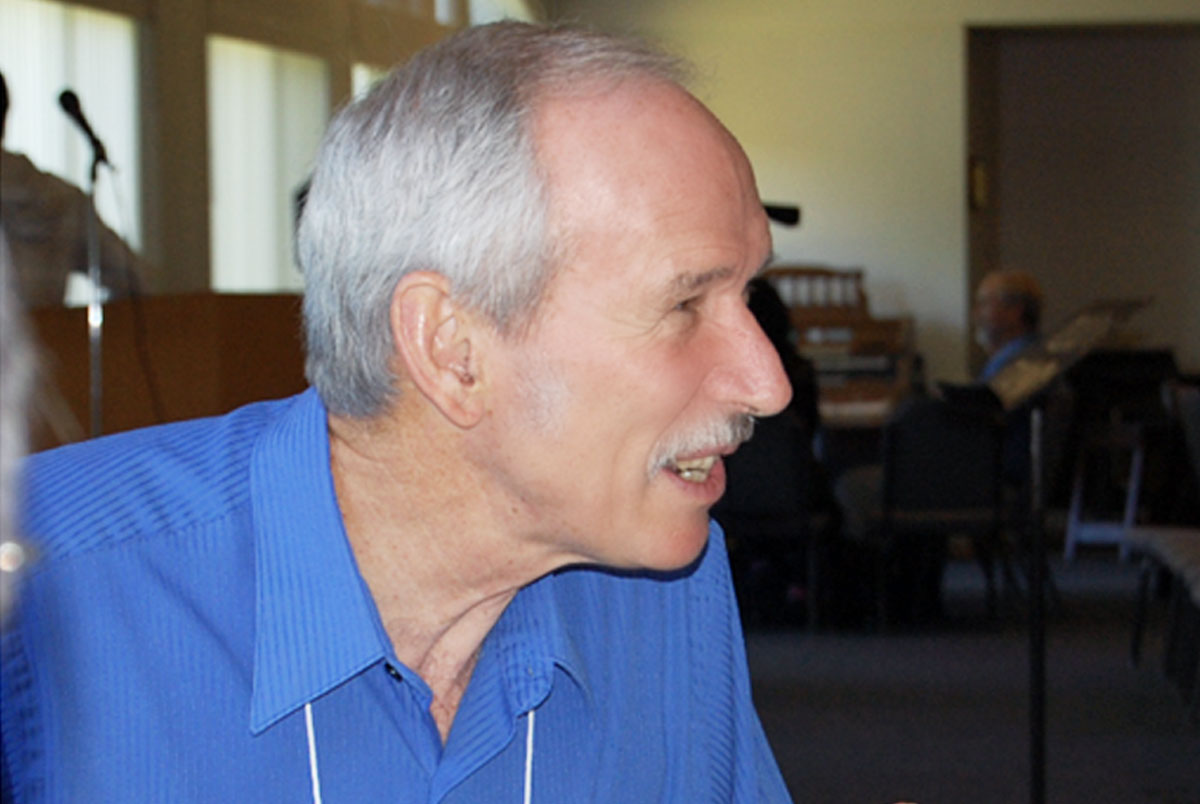
John was a solid-state physicist and semiconductor specialist known for his calm demeanor and passion for sharing the gospel of Jesus Christ globally. He harmonized academia, faith, and business, attracting international friends. Meeting John in 2009 in Sydney, he became a mentor and benefactor to my family, particularly in guiding our beliefs. His vision involved nurturing the next generation, and together we planned to create the "J&T Premier Academy" to support individuals and families. Sadly, John died in an accident, leading to the abandonment of the original Academy idea. However, inspired by a divine insight, I transformed it into "Joy & Transformation Premier Academy." John's legacy emphasized questioning conventional thinking and promoting a free, open-minded approach to faith and education. His influence and teachings continue through the Academy, reflecting his achievements and commitment to world missions.
Transformative Bible reading.
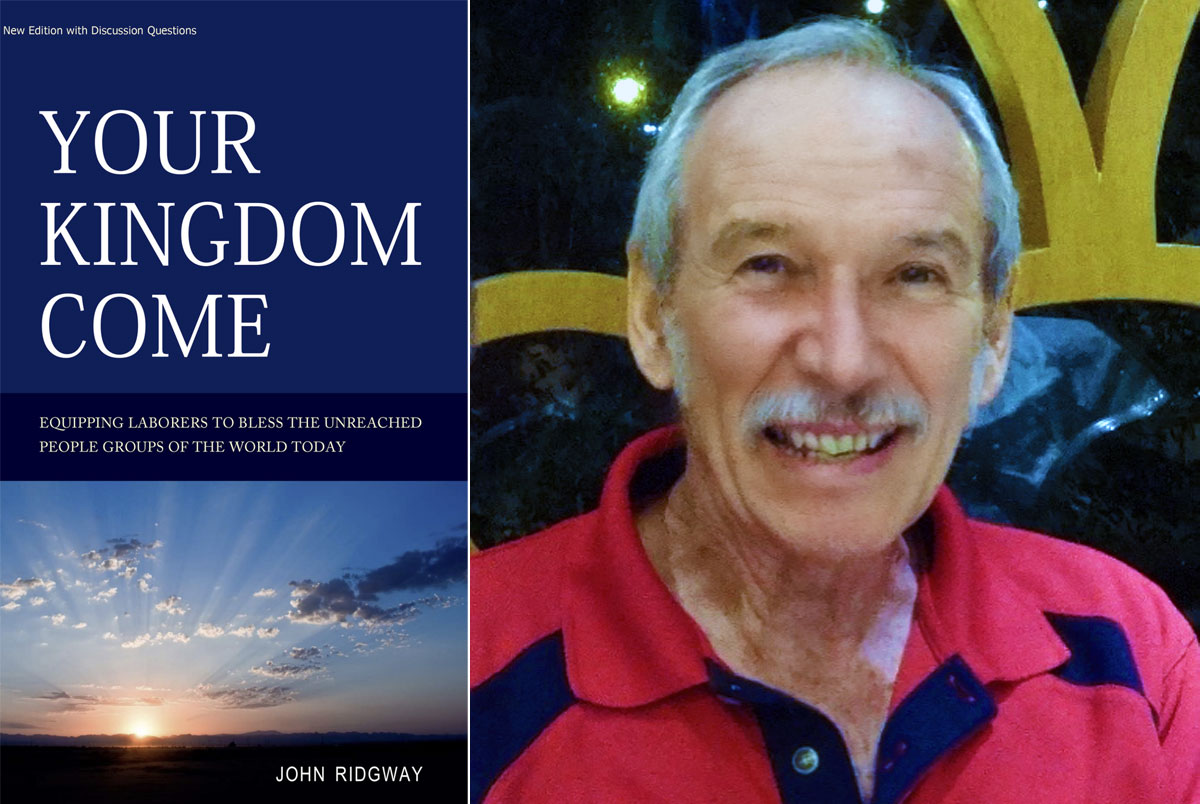
Your Kingdom come(New Edition with Discussion Questions)
John Ridgway
Equipping laborers to bless the unreached people groups of the world today!
“Your Kingdom Come” a super free translation by Dr.John Ridgway’s mentee, Tomoko.
This is a translation of the teachings of Dr. John Ridgway, a family friend and mentor in faith and life for over 10 years, as he reads and speaks from his book "Your Kingdom Come" (2018). (2018 edition), and my personal recollections. I, Tomoko Torihara, have also included my personal memories. Also, please keep in mind that the English version written here is a back-translation from my free translation. Therefore, you’ll find the differences from what John wrote in his original “Your Kingdom Come.”
Dr. John Ridgway passed away on February 22, 2022. This is a translation of Dr. Ridgway's book, interwoven with his memories. We hope that this will help you understand Dr. John Ridgway's warm personality and his sincere devotion to God.
The flow of the book is as follows, but please note that the order has been changed to better assist in understanding Dr. Ridgeway and that the author's introductions are in the original text.
INTRODUCTION
- Rediscovering the Gospel
- Restoring the Kingdom of God
- Reaffirming the First and Second Birth
- Recognizing the relationships that define the Church
- Rejoicing in the Holy Spirit
- to know that the Gospel gives freedom
- to use our gifts freely
Now it is your turn!
Let's take action!
About the Author
Words of Gratitude
Dr. John Ridgeway received his PhD in Solid State Physics from the University of NSW, Australia. He has worked as an industrial consultant for 32 years in India, Singapore, Malaysia, and the United States. He has coached apostolic "pioneers" in missionary work to the present (2022). He lived in India for 18 years with his wife, Ruth, and two Indian-born children, during which time he taught at the Indian Institute of Science, Bangalore, a premier educational institution, as a graduate student in the Physics Department.
While working with multinational companies in Australia and North America, he also contributed as an industrial consultant in Singapore for two years and in Malaysia for seven years. He was also commissioned by the governments of Thailand and Australia to contribute to the education of children of the royal family as an educator. He has a deep knowledge of Japan and has been traveling around Japan for more than 10 years for research and to deepen his friendship with Japanese friends.
Dr. Jonathan Lewis, Tim Lewis and his wife Rebecca, Jim Petersen, Dr. Vijayan, Steve Slater, David Bok, George McBride, and Bill Slater for their many contributions to making this book possible. Thompson, John Travis, Dr. Milton Coke, Abu Mannar, and Dr. Koshy.
The people whose names appear here were deep friends of Dr. John Ridgeway, and I heard their stories many times as we read the Bible together. I believe that he was blessed with wonderful friends and lived a good life while he was alive.
Now, from this point on, I will refer to the person who was my mentor and friend as "John" rather than "Dr. John Ridgeway".
We had planned to work together before his death, and I am still grateful for the many opportunities we had to talk, which are still my treasured times. When talking about the current era, John often said with joy, "In this era, you never know what will happen, and you will see God perform miracles from many things. I remember well how excited he was to talk to us.
'Boy, we are in a truly exciting time in the history of mankind! It is truly amazing that we are living in this time when God is doing something special! We get to see God doing miracles right now that we never thought possible, that we could only dream of!
Even though it didn't seem very exciting to me, his eyes seemed to see something beyond what he could see now. I think it was his deep trust in God that made him see it.
It was as if what Isaiah 43:18-19 says had been fulfilled. As it is written in the Word of God.
Do not set your minds on things that are to come.
Do not fix your eyes on the things of old.
Behold, I am doing a new thing.
Now it is budding.
Do you not know it?
Surely I will make a way in the wilderness, and rivers in the desert.
(new pathways in the scriptures)
And rivers in the desert.
(The Holy Spirit [John 7:37-39, the Living Water of Life] clearly shows a whole new way of seeing things. It is for every place in the world that does not yet know the love of Christ and has a thirst in its soul.)
So what do you think this *new thing* is?
In the last 300 years, countless, millions of people in Africa, Asia, and elsewhere in the global South have "decided to live according to Jesus Christ". The astonishing fact of this number is that its happening among closed tribes and people with a faith that makes anything divine (what we call a minority in traditional religions).
Hindus, Buddhists, Muslims, and others of the world's major traditional religions, people who would not first of all want to live their lives with Jesus Christ, want to follow Him as "their Savior and risen King."
This movement is taking place where there are family relationships and relationships among various countries, diverse cultures, and religions.
So what is the major theme of this movement? It is "the good news of the Kingdom of God. And that is exactly what Jesus taught and did. This movement of people wanting to "follow Jesus" begins with relationships within their own families and communities. The "relationships themselves" will take time, but they are the key to the movement of more and more people wanting to live their lives with Jesus.
If we look at Matthew 6:33, we see what Jesus commanded us to do. That is, "Seek first the kingdom of God and his righteousness. In Matthew 6:10, Jesus told His disciples that when they prayed to God the Father, they should pray like this.
“May his kingdom come, and may his will be done on earth as it is in heaven!”
Throughout history, many faithful workers have longed to see the "Kingdom come. And today, we can sense that the good news of the Kingdom is coming to the nations of the world, and that God Himself wants to spread the good news of the Kingdom to all nations.
Jesus said in Matthew 24:14, "This gospel of the kingdom will be preached in the whole world and witnessed by all nations, and then the end will come."
What role do you think God wants you to play in your life? What does He want you to do to make His Kingdom known to a world that still doesn't know Him at all?
A third of the world's people describe themselves as Christians. However, many need to be "born again". Another third live as Christians but do not yet have a personal relationship with Christ. The other third live in places where they have no way of knowing the Good News.
More than 90% have not yet heard anything about God (some say they would be in the 521 racial groups).
Our hope in writing this book is to help you begin a "new way" of communicating God. It is something you can do right where you live now. We want those who do not yet know God to know God! The purpose of this book is to answer that desire.
Is there someone where you currently live who "represents" those who have not yet heard of God? It could be a Muslim neighbor, a Hindu doctor, a Buddhist colleague, or a theism-believing friend in your college class. Is there a good way to tell those people and their families how to share the "good news"?
This book will give you seven strategic ways to do so. These methods will help you express God vividly. And I want to show you how you can tell people who don't know God, how you can tell them about God and how you can be someone they want to relate to, while still being very natural to them and their families.
I would like to help those in the world who believe in mainstream religions to somehow receive the "good news". Almost 90% of Asia has not received the "good news". And half of them live in the Indian subcontinent.
If you have been told by God to go to a place where there are no Christ-followers at all, this book will be of help to you. This book will also tell you how you can begin to share the Good News as an ordinary person who sincerely wants to follow God.
What are the seven strategic keys?
The Good News of God's Kingdom impacting the nations of the world. How can you take vibrant action to communicate it? I think these seven keys will help you as you think about that. Think of it this way, and you will see the results you want to see where people don't yet know God.
- rediscovering the gospel
- the restoration of the Kingdom of God
- reaffirming the first and second birth
- recognizing the relationships that define the Church
- to rejoice in the Holy Spirit
- to know that the Gospel gives freedom
- To use our gifts freely
I would like to share some memories of my mentor John.
Whenever John prayed, he always said "Father" before starting his prayer. When I saw him praying, I thought that it was as if "God the Father" was beside him. We cannot see him with our eyes, but it was as if he was talking to his father who was sitting there, as if we were listening to a conversation between a "good friend" and a "good father and son".
Besides, it was John who did not pray with his eyes closed. I think he could see God the Father with his spirit eyes. I remember thinking that I was in a different dimension, and it was like a child happily talking to God sitting there with him, "Dad, you know, this happened...". Just looking at John, I could feel that there is a living, breathing God here with us! I could feel that. I have rarely met someone who makes me feel that way. He was the one who made me feel that God has a personality and that He is alive, and that was John.
Then, God's desire was his very desire. He was the kind of person who always wished that people he met everywhere would know about God and that he would somehow have a chance to introduce them to Him. He spoke to the waitresses at the café where he went every day to buy coffee, and seemed to enjoy the conversation. I wondered if there was anyone he didn't like.
He also didn't seem to like black-covered Bibles. He told us that there is a device to fill in a mysterious word in a Bible with a colorful cover. He said, "When I have a Bible with a cover like this, I get approached by people who see it." He uses everything he does to devise ways to introduce God. I was amazed many times at how truly thorough an evangelist he was.
It was his belief that "God has a living personality (a present, moving presence) and He loves to relate to people." He really hated "anything" that prevented him from communicating that God has a living personality. I could tell straight away by looking at him that he was a person who had given 100% of his life to God, and that God loved John, too. I could tell from his whole body that he would do anything if he could tell God about it. I would do anything if I could tell God about it! Behind his gentle smile, he had a supple and strong faith. I really hope to see him again!
Now, let me quickly share with you the key contents of the meeting.
God is working in people in many different cultures in wonderful ways. We can see it. There is no single way to achieve the desired results. There is no one way to get the results you want, because the gospel can appeal in many different ways to different groups of people.
What is the gospel?
In simple terms, isn't it a picture of relationship? What kind of relationship do you have with God the Father and Jesus Christ, the Son of God? It would not be an exaggeration to say that your very appearance is the very expression of God's gospel.
In the vibrant relationship we experience with God, we can experience all of the blessings. God gives us abundant answers and blessings for forgiveness of sins, restoration of all relationships, joy, peace, purpose in life, what happens after death, who we are, why we are alive, and so on.
Say, "Holy Spirit, please come into my life." With that prayer, you will be brought into a personal and dynamic relationship with God the Father and Christ Jesus, the Lord!
As it is written in Ephesians 1:11 (Message Bible).
"Christ teaches us who we are and why we live."
The gospel is not a "gateway to religion. Nor does it mean that if you believe in Jesus, you must become a "Christian. It has nothing to do with "religion. It has nothing to do with "religion." It is about a personal relationship with God! It is the Gospel that leads you there.
E. Stanley Jones said. We must tear the wrapping paper of Christianity and take Christ out of the box. Yes, God is not a small "box" to fit into.
2 Corinthians 3:2-3 (Message Bible) states. Your own life itself is the "letter" that makes everyone understand God just by looking at it. It is a letter not written with a pen, but by Christ Himself in the living Spirit of God."
In other words, your Muslim, Hindu, and Buddhist friends will understand that this is what the Bible is about by looking at you from the first meeting. So it is very important for you to become Christ-like yourself. Because they will understand Christ by seeing you. Paul's sincere desire was that they would see the greatness of Christ's presence in him (Philippians 1:20)
It is actually quite a mystery to have Christ "living" in me, as Colossians 1:27 says. That I am becoming more like Christ (1 Timothy 3:16) and the gospel, which is "good news," can only be described as a mystery. (Ephesians 1:9, 3:3-4, 6-10)
As Paul says in Ephesians 2:14-18 (Judaism, v. 15), a wall of hostility separates Jews from Gentiles. Religion builds walls between people, but we can break down these walls as we develop a personal relationship with Christ. Regardless of one's religious background, with Christ everyone can experience peace and unity (with effort, of course). Bringing peace and unity by breaking down the difficult walls between human beings is something that not even the United Nations can achieve.
So what are we to do in our relationship with the dynamic God who accomplishes this? Let us look at what God said to King Asa. The Lord's eyes are searching the whole earth to reveal His power to those whose hearts are fully devoted to Him" (2 Chronicles 16:9). God's love for us is truly overflowing and abundant. And as our love for God deepens, the gospel is expressed in us more and more clearly. As a result, we play the role of "ambassadors" sent by God.
In 2 Corinthians 5:17-21, "We are ambassadors for Christ. We can help those around us to be reconciled to God, as God encourages through us. As a result, they too will have a wonderful personal relationship with God. We have been given the role of messengers to communicate God's desires on His behalf.
My good friend David, who represents Australia in trade with Japan, lives in Japan with his wife and is learning Japanese. He is well versed in Japan's trade policy and in the trade situation between Australia and Japan, and he is always wondering what he can do to better approach Japanese business people. He is always thinking about what he can do. In this way, we should always be thinking about what we can do to share God with those around us and what we can do to restore the relationship between God and people, and we should give 100% of ourselves to that.
John Wesley once said it this way. God uses only one person who is 100% devoted and faithful to God more than 99 people who are only 99% faithful. God accomplishes more through that faithful person." The best "ambassadors" are those who are 100% faithful.
What we must be careful of here is that the evil one works in a clever way. What Christ did is really very "plain". As 2 Corinthians 11:3 indicates, the "good news" has a very deep meaning, but it is really very simple and easy to understand. There is some reason for the tendency to make the "good news" into something petty and cumbersome, even into a doctrine that is difficult to understand.
In 1 Corinthians 2:2, Paul says, "I have decided that when I am with you, I will know nothing else but Jesus Christ, Christ crucified," and this "good news" is so powerful that it affects and changes many areas in which all people are involved. It has a huge impact spiritually, physically, emotionally, and socially. It really is so powerful that it changes everything. Jesus, in fact, has done so many good things, healed so many people, cast out demons, and touched the ills of humanity. He intervened in the lives of many and made great changes.
This gospel that we still experience today must touch life itself, encompassing people in their entirety. Its sphere extends to our families, our relationships, our economic situation, and our working relationships. And it has the power to encompass everything, using our influence within the community, caring for the poor, difficult cases with social dilemmas, addressing social problems, and so on. In this way, the Good News has the power to transform us from the inside out.
The Good News has the power to transform us from the inside out, but doctrines, difficult theological interpretations, and "church" rules keep people from a vibrant relationship with God. John was very sorry to hear that. He also told me regretfully that no matter how much he explained to the congregations and scholarly teachers who live by the pillars of that doctrine, there was nothing more he could do, and that there was no point in saying it because they would not listen to what people had to say. So he laughed and told me that it is written, "Be like a child.
Prasad Krishnamurti, a Hindu friend of mine in India, told me, "I am not a Christian. Jesus is the God of Christians, and it doesn't matter to me, who already has a God of my own belief." Hindus are said to have over 300 million gods. Prasad wanted to know Christ, but he seemed to think that if he knew Christ, he would have to convert to Christianity, which has no appeal. So I told him.
The "good news" isn't about religion, it's about developing a personal relationship with God. So you can relate to Jesus as a Hindu. There is no need to convert to Christianity."
Prasad was very comfortable with this explanation and began a new walk with God without changing his position. I was then able to talk with him for hours, reading the Bible. Soon I was able to get involved with his family. We had meals together on various occasions. There was interaction between the families. Gradually, he came to understand the meaning of the "good news" from our friendship. Over the next few years, he and his entire family became open to the gospel "good news" and its impact on their Hindu community.
Rediscovering the Gospel
Discussion Questions
- How would you describe the gospel?
- How do you make the gospel appealing to your unbelieving friends?
- How do we make the gospel complex?
We want to share not just the "good news" but the "good news" of the Kingdom of God.
The importance of the Kingdom of God again comes into play here as we seek to bring it to countries where the Word of God has not reached the world in decades, especially non-Christian countries in Asia and elsewhere.
E. Stanley Jones worked with Hindus, the highest caste group in India, as described in his million-selling book, "The Christ of the Indian Road" (1925). Toward the end of his life, he wrote The Unshakeable Kingdom and the Unchanging Person (1972). His ministry and writings had a profound impact on 20th century congregations, informing them that the Kingdom of God is of paramount importance.
In Hebrews 12:27-28 (The Message Bible) we read. The phrase "shaking it up one last time" implies a thorough cleaning. All the historical and religious junk is to be removed so that the "unshaken essence" is kept clean and not confused. Do you know what is left? The Kingdom of God that cannot be shaken. And in Hebrews 13:8 we read. Jesus Christ is the same yesterday, today, and forever." The King never changes!
If you read the four Gospels, you will find that the Kingdom of God is mentioned 119 times. It is amazing that the center of all of them was what Jesus said and did.
That was Christ's message (Matthew 4:23) and the purpose of his life (Luke 4:43). It was the focus from the beginning of his mission (Matthew 4:17,23) and the theme of the eight blessings (Matthew 5:3,10) and the rapture on the mount (Matthew 5:19-20). It was the first petition of the Lord's Prayer (Matthew 6:10), commanding us to make the Kingdom of God the first priority in our lives (Matthew 6:33).
When He told His disciples of His purpose, the center of the story was the Kingdom of God (Matthew 13:1-52). When Jesus appeared to His disciples for 40 days after His resurrection, His last words were also about the Kingdom of God (Acts 1:3).
The Kingdom of God was also important in the disciples' mission, and was the focus in Philip's Samaria (Acts 8:12). After three missionary journeys, Paul's theme in Rome was also the Kingdom of God (Acts 28:23). Even Paul's prison letter states that he "preached the kingdom of God and taught about the Lord Jesus Christ" (Acts 28:31).
So what does the Bible say about the Kingdom of God?
First, that it is a "mystery" that no one can fully understand about the wonderful Kingdom of God (Matthew 13:11).
Second, it is invisible and not easily understood.
Third, the Kingdom of God is in "relationship. It refers to God the Father, God the Son, and God the Holy Spirit, who is involved with us who believe, and with the lost (those who have not yet heard of God). It is not about beliefs or rituals.
We do not claim to be "church" or "Christianity" (Colossians 1:28), but strongly believe that a deep relationship with Christ Himself leads believers to maturity.
I was sitting on the floor of a large Buddhist temple in Bangkok chatting with several Thai Buddhists and their friends. We talked about the "good news" there, and it began in a very natural way. We prayed at that temple and had an even deeper conversation. The Kingdom of God cannot be defined by religious structures or physical buildings. This experience made it clear to me that it begins and comes alive and works from within this natural network of people.
I am a certified "Naikan Interviewer" by the Japan Naikan Society, an academic society, and there is a Buddhist element in my work. I wondered how it would be possible to say that I believe in the God of the Bible and yet be involved in the Buddhist aspects of it. So when I mentioned it, John laughed and said, "Don't worry about that, do what you think is natural for you in the culture there, and it is important for you as a Japanese to know your Japanese friends. So I was relieved when he told me, "There is no such thing as feeling uncomfortable with the posture of bowing to people with your hands together (something we do in the Naikan Method), which is natural for Japanese people. He was a man of humble faith who could thoroughly respect different cultures without ever being superior.
Another time my friend George and I were all together with his Thai Buddhist friends at a famous Buddhist temple in Chiang Mai. As we were worshipping Christ in the Thai Buddhist way, our Buddhist friends, who were not yet familiar with the Kingdom of God, asked questions. They were in their familiar and relaxed place and we were able to talk with them in a very nice atmosphere. When I saw that state of affairs, I thought. In the Kingdom of God, there are no boundaries that say "you have to do this" or exclude others. Rather, the "Kingdom of God" begins with the relationships that already exist in the community in which the person lives. I also found words from the Bible on the wall of the same temple.
Fourth, the Kingdom of God is spiritual, not physical. 'The Kingdom of God is not about food and drink. It is about how God is involved in your life. God will correct the misalignments in your life, assemble it, and complete it with joy" (Romans 14:17, The Message Bible).
Fifth, the Kingdom of God is eternal (24/7). And it cannot be expressed in a physical, visible form, as in the church, where organization exists. The "church" refers to people, defined by "relationships" that exist 24/7. The Epistle to the Ephesians illustrates this. John spoke of physical baptism (Old Testament) and Jesus spoke of spiritual baptism (New Testament). The Jews spoke of the Passover, and Jesus became the Passover Lamb for us (1 Cor. 5:7-8).
Worship in the Old Testament took place in the temple as in Romans 9:4, but the New Testament era saw a revolutionary change to "spiritual worship" as in Romans 12:1-2. Thus, it is understood that under the New Covenant, it is 24/7 and eternal.
In Ephesians 1:3-14, Paul spoke of the mystery of God's work among the peoples of the world. He said that when you have a personal relationship with Jesus Christ, God will consider you His "heir.
God's plan is to make that "Kingdom of God" visible. It is in that inter-personal relationship among people rooted in the community that God can be found.
Therefore, it is quite important to use your relationships to represent the Kingdom of God in a well visible way, which is "to represent the Kingdom of God in the religion that already exists. The Kingdom of God becomes visible through the "relationships" that exist there. It also makes it possible to cross various divides.
The Christian religion is not welcome in some parts of the world. But the "Kingdom of God" that Christ, who lived a wonderful life, showed himself, is a loving attraction. Therefore, that loving attraction can make the "Kingdom of God" known among the non-Christian nations of the world.
My Hindu and Muslim friends in India have their own religion and never had any desire to become Christians. That is because to be a Christian is like being an Englishman who brought Christianity to the country. The English built a church building for their own soldiers, but they did not allow Indians to enter the building. Because of this history, people thought, "It's a terrible idea to become a Christian!" So I explained to them.
So I explained to them in this way. Jesus did not come to us to bring us into [the church organization] or [Christianity]. Rather, he came because he wanted us to know the Kingdom of God." When Jesus spoke in Matthew 6:33, "Seek first the kingdom of God," His thoughts were clear. This is where a sincere conversation with a local friend began. Who is Jesus?" The journey to find out "Who is Jesus?
As we read the Gospels together, we could understand the true meaning of the "good news" of the Kingdom of God. It took a very long time, but I could feel the Holy Spirit carefully speaking to me in the seeker. Jesus wants everyone in the world to enter His Kingdom. He wants everyone in the world to enter His Kingdom and to enjoy a wonderful personal relationship with Him like that of a close friend.
While teaching a graduate course in solid state physics at the highest graduate school in India, I met a student belonging to a high caste. He was studying engineering at Sathya Sai Baba's college in Bangalore. We became friends because we had a mutual friend and we discussed many things. My friend Radhakrishnan told me, "You Western Christians demand that we give up everything we hold dear and convert to a foreign religion. He also said, "You are scratching our character." He and I took time to read the Bible together and walk together.
When I had this discussion with John, I asked him what questions he often asks. I thought it would be nice to have a collection of questions that would be helpful. He replied that it is okay to do so, because the Holy Spirit will guide us if we pray so that we can ask the questions that are most appropriate for that person. I am a psychotherapist, and I often think back to this conversation with John when I talk with my clients. The conversation with John taught me two things: not to ask unconventional questions, and to be open to the unique nature of the person. I am sure that he guided each of his friends through their faith journey with sensitive kindness.
As I was reading Ephesians 2:11-22, Radhakrishnan looked at me and said. 'We are equal, aren't we? I thought I was unclean because my ancestors worshipped Hindu gods for generations." And. He could understand that they could be citizens of the Kingdom of God. It is not important that we have a different religious background, but that we can enter the Kingdom of God by following Christ. As a member of the Kingdom of God, he could live as before in his own family "as a Hindu". Later he married a distant relative, a Hindu woman, in an arranged marriage. He became what Jesus calls "the lamp of the candlestick that lights the whole family" (Matthew 5:15).
And he is now the Dean of the College of Engineering at a prestigious university in India, carrying the "good news" and influencing many Hindu students.
Restoring the Kingdom of God
Questions for Discussion
- How would you describe the Kingdom of God?
- What is unique about the "good news" of the Kingdom of God?
- why did Jesus speak so much about the Kingdom of God?
A very important thing for all believers to know is that we have two births. It refers to our physical birth and our spiritual birth.
The first birth is a physical birth, the place and specific time of a person's birth. The second spiritual birth is "spiritual" from God.
This is what Jesus meant when He said to Nicodemus, "You must be born again" (John 3:3-3). The second birth, the spiritual birth, enabled Nicodemus to see the Kingdom of God.
For the past two hundred years, new believers have thought that they had to abandon the non-Christian religions in which they were born and raised (Hinduism, Buddhism, etc.), the culture in which they were raised, and their families. By making this assumption, they isolated themselves from their own family, friends, and community.
But now I knew that it was God who gave that person their first birth. 'For them God determined the times (history) in which they should live and the exact place (geography) in which they should dwell. He did so, as it is written, that men might seek God, perhaps by groping, and find Him" (Acts 17:26).
One Hindu family born in Karnataka, India, understood that "God gave them life in the land there and made them to carry on the heritage of the land.
Their culture, religion, language, and history were given to them by the place where God decided to give them life. They also inherit their unique personalities, physical characteristics, skin color, and family history at their first birth. These are all things that God does. Of course, God also intervenes in the process of breaking and rebuilding nations (although these factors are also the result of human sin). As Romans 1:18-23 says, with a redeeming God and a people who respond to Him, the world's cultures, etc., tend to take over.
This makes it very important to know the person's first birth, their parents and grandparents. Likewise, it is also very important to know their family history, their place in society, their religion, and their political and social values.
In the days of the early church, this is what the Jewish but believing congregation thought. Gentiles must abandon the "heathen" culture and join the Jewish culture, religion, and society, they thought. But the Holy Spirit led them in a different direction. What we are told in Acts 15 was that Jewish believers were "not all believers will become 'Jews,' but are free to remain in their original way of life.
Jesus always respected a person's first birth. On his way to the city of Samaria, Jesus met a woman at a well and stayed there for two days. As a result, many Samaritans came to believe that Jesus was more than just a Jewish prophet. They understood that Jesus was the Savior of the world (John 4:42).
There was a story about Jesus casting out demons from a Greek man who was possessed by an evil spirit. There was the story of Jesus casting out an evil spirit from a man who had 2,000 demons in his body and leading him to a new life. This man immediately asked to become a disciple of Jesus, a Jew. But Jesus sent him back to his family in the Decapolis (Greek for ten cities). The Decapolis is an area that means "ten cities," built by Alexander the Great and later renewed by Julius Caesar. In Mark 5:19, we read that the man not only returned to his own family, but also went to all the people of the Decapolis.
As a result, a few months later, in Mark 8, 4,000 Greek men gathered in the area to hear Jesus and his disciples. A movement very similar to what happened in Samaria was started by the Samaritan woman (a great movement that begins by telling people about Jesus in the place where you normally live).
Paul encouraged the Corinthians to respect the first birth and to remain where they originally were (1 Cor. 7:17-24). This is even if it meant engaging in pagan temples, worship of pagan gods, and sexually lewd behavior.
Paul did not absolutely affirm pagan gods or sexual immorality, but by staying in their lives and engaging with them, Paul was able to introduce them to Jesus and the Kingdom of God. Paul wanted to help them to become deeply involved with the living Christ, who had the power to change their lives. He wanted to help them to experience the second birth, a "spiritual rebirth," because that is what it is all about. Paul wanted to help them live a good life in the midst of rough living by instructing them. They learned to live righteously even in an environment that was not right.
The first birth enables the movement of the gospel; the second birth enables the purity of the gospel. One Hindu family in Karnataka was able to associate with other Hindu families without any problems. This is because the place of their "first birth" was in the same hometown. The reborn Hindu family was able to introduce the "good news" to other Hindu families. The fact that they were from the same hometown helped build close relationships.
Thus, there are two elements that create the identity of a new congregation. The "first birth," which is physical, and the "second birth," which is the spiritual birth that God gives.
As a Muslim family from Hyderabad in Andhara Pradesh told me, they also identified themselves as people with a Muslim background, belonging to a Muslim community but following Jesus (Isa Al Masih), the Messiah. The religion of the family, who lived in Tokyo, was Shinto. Although they belonged to it, they identified themselves as followers of the living God.
Hindus, Muslims, and Buddhists think that they must abandon the values of their present way of life, that they must convert to Christianity, be baptized, change their names, change their clothing and food to fit a different culture than the one they have lived in, and make a cultural conversion. But when they realize that they are respected and that they do not have to deny their first birth, the gospel spreads freely to the world's strangers to God. This is exactly what will begin to happen in the first century.
As we read in Matthew 16:13-20, Jesus sent his disciples on a four-day walk. In the midst of this, an important conversation about who Jesus is and His role and that of His disciples is recorded in the pagan land of Syria (Philippo-Caesarea is at the foot of Mount Hermon, 25 miles north of Lake Galilee). The ancient name for this area was Pan (the god of sheep), and it was believed to be the entrance to hell, with a large cave named after him. A statue of Tiberius Caesar was erected to keep people from going to hell. It was in this very pagan place that Jesus asked his disciples, "Who do the people say that I am? This was about a year and a half after Jesus began his public ministry. And the disciple replied, "People say that Jesus is one of the Jewish prophets. Jesus then asked the disciple, "Who do you think I am?" Peter answered, "You are the Christ, the Son of the living God."
People understood Jesus' "identity as a man," but only Peter understood His "divine identity."This is because God revealed Himself to him. Our identity as persons (first birth) is outwardly visible, but our spiritual identity (second birth) is discerned in the spirit; as we are told in 2 Corinthians 2:14, "God always adds us to the victorious march, so that everywhere we may radiate the fragrance of the knowledge of Christ He will do this for us."
Jesus told us who He was, for what purpose, and what He came into the world to do. Jesus' task was to create His Church. And our role is to use the "keys" of that kingdom. That key we have is deeply involved in the second birth (transformed lives, the Bible, the Holy Spirit, prayer, loving relationships, etc.). But we also have the key to the first birth as well. That is, nationality, religious background, social status, cultural background, etc. are deeply involved. It is in this area that insight and a deeper knowledge of the living God is contained.
It is important to master the language in order to communicate about the "Kingdom of God" to a particular community. This is because if you master the language, you will know the relationships in that society and you will know the keys to how to relate to them. Above all, you can reach the heart of them by speaking in their language. It is very important to learn about their culture, history, and social structure (clan, caste, tribe, social class, etc.).
To understand their values, it is also important to know the heroes they admire (Chinese scholars, writers, and essayists John Sung and Ran Yunfei), Kanzo Uchimura and Toyohiko Kagawa in Japan, Mahatama Gandi and Sadhu Sundar Singh in India, etc. We need to know the spiritual and ritual traditions of the people we wish to serve. It is also very important to know the values of the civilization that brought them here, which greatly influence their families and their lives in the country, but we do not need to go into the difficult academic aspects of understanding these things at all. Rather, we can ask them to tell us about their religious beliefs and various religious practices when we have a personal and frank talk with friends in the places where they normally live.
Reaffirming the First and Second Births
Questions for Discussion
- Describe your first birth. Tell the story of your second birth.
- what do you know about the first birth of your unbelieving friends whom you want to lead?
- what keys to the kingdom do you think are important to the religious background of the people you want to share the gospel with?
As newcomers to a congregation become involved with their own families and others around them, their relationships will teach them what church is all about. As a congregation deepens its relationship with God, it needs encouragement from others. The New Testament is full of "one another," words that describe the relationships that make up the "church. For example, love one another, pray for one another, obey one another, etc.
So what role do you think the "family" has in regards to the "good news" of the Kingdom of God?
Abraham was a very important figure in the Jewish nation, but already from the time of Abraham, the center of the gospel has been the "family. God's promise to Abraham and his family included the words, "All the families of the earth will be blessed through you (Genesis 12:3)," and Galatians 2:8 says that the gospel was first preached to Abraham. In reading Genesis 2:1-3, we see that the center of this good news is the "family. And the family is the natural expression of the "church.
The Greek word for family, oikos, is found 114 times in the New Testament and more than 900 times in the Hebrew Old Testament. The "family" of God is also described in 1 Timothy 3:15 as the "church" of the living God.
The number of times this word appears in the Bible shows that there is a deep connection between "church and family. In other words, we can understand "church" as referring to a "family" rather than a "building" in the Gospels and Acts. We can understand that it is quite an important term considering the number of references to it so many times in the Old and New Testaments.
By the way, I would like to note in the translation of Romans 16:5, "Give my regards to the churches in their houses." Strictly speaking, it means "give my regards to the "churches" in their homes," referring to the relationships within those homes.
Family life was central to what Jesus practiced. He used "family" to describe the coming of the Kingdom of God. In Matthew 8 and 9 alone, there are eight references to families, and we can understand from these that there is a very deep connection between the coming of the Kingdom of God and "family," and that the family is at the center of the gospel. It is important that the gospel of the Kingdom of God is expressed in the context of the family. Therefore, as this verse, Matthew 5:16, says, "Open your homes and share generously what you need, and the opening of people's hearts will cause them to open their hearts to God as well.
The family is also the linchpin of discipleship training for generations, and we see that Stephen's entire family, described in 1 Corinthians 16:15, was involved with other families in a natural way and was responsible for missionary work. It is also important to be tactical in training families as disciples of Christ for generations to come.
Deuteronomy 6:4-9 describes what is important when training families. These verses are called the Shema (in Hebrew, "Hey, listen up!") and have become a Jewish confession of faith! ), which is the Jewish confession of faith. They were recited daily and even recited in the synagogue on the Sabbath (Matthew 22:37-38). (See Matthew 22:37-38; Mark 12:29-30; Luke 10:27).
The family is the foundation of leadership, and it also describes the requirements for stewards. Leadership in the Kingdom of God is organizational, unlike human popularity contests, etc. It is an appointment from God as stated in Galatians 1:1-2. The way each individual elder or steward lived and the way their family lived was a very important item in communicating the Kingdom of God.
God's blessings are also poured out through families. Because of Abraham's faith, blessings were poured out to generations of families. God's blessings are poured out on us, our families, and other families as we learn of the second birth and become God's family. Everyone has a family on earth (first birth) and becoming God's family (second birth) is important to the gospel. This is because it has a profound effect on the families around us.
Here is a quote from the story of Zacchaeus, the hated tax collector. Jesus was concerned about Zacchaeus and his family. And as Luke 19:9 says, "Today salvation has come to this house. For this man is also the son of Abraham. We can see that salvation was extended to one person, Zacchaeus, by knowing his first birth and accepting his second birth, and to his family as well. It is important to note that this is a very different perspective from that of Westerners, who tend to focus on the individual.
I have had the pleasure of knowing Ashok's family in India for several years. It was a very slow process as members of a joint Hindu family opened their hearts to the gospel.
In my conversations with John, he often told me that "it really does take time," as described here. I guessed that he must have prayed and prayed and prayed and patiently stayed with them, although it was probably a slower process than would be possible in today's age of speed. John's work is like that of a bullet train, so it must have felt very slow at first. I sometimes wondered if he had developed his own patience through this time-consuming process. Perhaps that is why he always said, "in due course. He used to say, "You're doing that again! and we used to laugh. It must have been the result of his life of evangelism. His calmness must have been the result of his disciplined patience. I still remember his patience and calmness with great fondness.
Finally, noticing a change in Ashok's way of life, his grandfather began to ask him questions. They began to read the Bible using a simple English New Testament and repeatedly asked and answered questions. When he finished reading the Bible, his grandfather asked, "Do I have to change my name or religion, attend church, or follow the Christian way of eating?" Ashok replied, "You don't have to. Just believe in Jesus and you will become a member of God's family and enter the Kingdom of God. My grandfather was truly delighted and said, "I believe in God and His Son Jesus. He then gathered about 50 family members and told them all that they could be forgiven of their sins and given eternal life by believing in the living God and His Son without giving up their Hindu status. This opened the hearts of many families to the good news.
For first-century people, relationships were basically family relationships. And Jesus led them to faith through the natural relationships between family members. In the New Testament, the family of Cornelius (Acts 10-11) is noteworthy. His family was one of the first Gentile families to accept Christ, and there we see seven natural networks within the family.
- immediate relatives
- relatives
- close friends
- work colleagues (soldiers)
- people who worked for him (servants)
- neighbors
- those in need
Seen in this way, it is a classic case of oikos, a natural network of people involved in Cornelius' family (Acts 10-11).
I believe this is a deeply insightful insight gained from John's long life of evangelism. He later shared that while caring for his wife who was seriously ill, he came to the conclusion that the "husband-wife" relationship is the highest priority because it is the foundation of the family (oikos).
Everyone belongs to a natural oikos family, but when the gospel enters the oikos family, it goes further and becomes a "spiritual oikos family. And that spiritual oikos family is the Church.
The Greek word ekklesia appears 114 times in the New Testament. It is usually translated "church," but in Acts 19:32, 39, and 41 it is translated "assembly. It means "a gathering of people," but it was sometimes used for a legal assembly, as in Acts 19:39. The word ekklesia was used to refer to a gathering of people who had been called together. In other words, "church" in the New Testament did not mean a regular assembly or a building. It meant people in relationship with one another. Today, however, "church" refers to a building or an organized congregation. Why has such a change occurred?
The explanation from here on is something that John spoke about with great force at all times and should be read with care. He spoke of it as an unfortunate historical fact, an example of the political use of the true meaning of the Bible.
Raised in a devout Confucian family, Kanzo Uchimura was studying at Sapporo Agricultural College when he met William Clark, a devout Christian and president of Massachusetts Agricultural College. Impressed, Uchimura believed in Jesus. He later studied theology in the U.S., but was very disappointed with the Christianity he saw around him and returned to Japan. This experience led him to ask the question, "What is the church?" and as a result, he started a movement that is different from the institutional church.
In his research, Uchimura discovered that the English word "church" comes from the German word kirche, which is from the Greek word kyriakon, a word that does not appear in the New Testament and meant a religious building. Today, the English word church has two meanings. It can refer to a congregation of people who are related to each other, or it can refer to a building in which regular religious gatherings are held.
The Bible was translated during the reign of King James. The king did not want to use the word ekklesia, the Greek word used in earlier Bibles to mean "assembly" or "congregation" in English, in his translation. The reason for this was that at that time there was a movement of faith revival that was turning to Christ, but they were taking the form of "home congregations" that met in homes. And the movement was refusing to join the Church of England, which was under the authority of the king.
In the midst of all this, King James issued 15 guidelines for translators to follow. The guideline was that they must use "church" as a translation of ekklesia. In doing so, he was attempting to discredit non-Church groups by saying that the place of worship was the Church of England. The head of the Church was King James himself. Where was the true object of worship and respect?
The important part of the New Testament that refers to the church is people. It refers to people who have a personal relationship with God, who relate to one another, who are lost, and who are backed by love.
This gathering of people truly represents the "Kingdom of God. It can take many forms, depending on the situation, but we are free to enjoy this human relationship freely and generously, whether formal or informal. When we think about what a natural church is, it can be a family that is involved 24 hours a day, 7 days a week, or it can be a congregation that meets only when necessary. In this way of thinking, congregations are free to change at will. And we have advanced the gospel like never before.
New believers are in frequent contact, praying together, and sharing their study of the Word. Some families get together every Sunday to talk about problems they are facing, encourage each other, read the Bible, and pray. Others connect with people far away via their smartphones. In a society where various religions and irreligious beliefs dominate, congregations will no longer be dictated to by anyone if they know that these various forms of gathering are also "church. They know that they have the freedom to walk in faith on their own, in their own way, in their own relationship with God.
This form of church can have a "companion" to help, or it can have some support or someone to advise. It can also be involved in a way that is just right in the person's life. In other words, you are free to do it in your own life.
The Church Begins with the Family, Recognizing the Relationship
Questions for Discussion
- How do you understand the church? Write it down.
- Is your family the church? When two people relate to each other, is that church? Are two families that are involved church? Is it a church when you get together regularly? Or can we call it church when we are free to relate to people whenever we want to?
- Deuteronomy 6:1-9 tells us that in the Jewish nation, we are to teach and train our families to observe the Great Commission given in the Old Testament. They thought it was the Great Missionary Commandment given in the Old Testament. Matthew 28:18-20 contains the New Covenant Great Commission. How on earth did the early Jewish disciples understand the idea of discipling a nation of which Jesus speaks? When you think about this, how would the disciples have positioned their families with regard to the new New Covenant's new missionary command, "Make disciples of all nations"?
It is very important for new believers to know that the Holy Spirit is always present, to know that He is the one who completes the power and work of the Holy Spirit, and to listen to Him and trust His presence when reading the Bible. Proverbs 3:6 says, "Wherever you go and whatever you do, listen to the voice of God. God is the one who will guide you correctly so that you will not be derailed. Newly believers read the Bible and pray to God for the Holy Spirit to guide them. The Holy Spirit shows us sin and gives comfort to those who trust God and come to Him in difficult situations, such as persecution.
Now, after believing in Jesus, Hindus are troubled by the question of how to deal with food offered to idols (1 Cor. 8:1). The Hindus I have worked with have derived answers to that problem from 1 Corinthians 7-10. In particular, they were able to get hints from chapter 8 on how to behave in the temple and how to handle food offered to idols. I also found out what they should watch out for, such as worship of demons that can lead to mixism.
Furthermore, they understood my role as a companion who comes from the outside to listen to them, encourage them, and walk with them, as 1 Corinthians 9:19-23 says. This part is a controversial place in the West, so I looked up over 20 commentaries. However, I could not find anywhere in the commentaries the insight that the Hindus who believe in Jesus shared with me that way. After experiencing this, I came to understand that their insights were exactly what the Holy Spirit had taught me. I was shown with my own eyes that the Word of God is true, as John 14:26 says, "The Holy Spirit teaches you all things.
We also need a translation of the New Testament that is easy to understand. It cannot be a translation that is directly imported from the West. Also, a Bible with a cross on the cover, which Westerners usually use, is not good for my Muslim friends. This is not appropriate because the cross is reminiscent of a sword. (It is very important to know these hidden thoughts).
If the Bible has a cover in the local language, it is more familiar, and if the Bible has no numbers separating chapters and verses, it is easier to grasp the development of the Bible as if it were a story. And the inductive way of reading, the way of thinking about what it means to you, is very good. It is easier to accept the words of the Bible because you can see how the Bible relates to you, unlike the deductive reading, in which questions and interpretations are prepared to lead the reader to this conclusion.
John often asked me questions like "What did you notice in this section? He never thought that he wanted to lead us to this answer or that it was the right answer to answer in this way. No matter what I answered, he would listen quietly and ask, "Then why do you think so?" He was thorough in helping the individual to understand Jesus in a deeper way. He often said to me, "That is a good question," and when I commented that he often gave that answer, I will never forget the smile on his face as he chuckled and said, "That is how you stall for time when the question is difficult. He was a really kind teacher and never once said to me, "That's not right," etc. He was a wonderful guiding light who sincerely answered any crazy question or comment by quoting scripture.
Newly religious people pray for their families, friends, neighbors, and co-workers. Many Hindus who love Jesus experience spiritual warfare, but it is with the help of the Holy Spirit that they are able to respond at such times. It is the power of the Holy Spirit that enables us to know well the heart of a person who is seeking God and to open that heart. And it is through intercessory prayer that we pray for that person, as we see in 1 Samuel 12:23, who was a great intercessor.
John Hyde, an American missionary, sowed the seeds of the gospel in Pakistan through obedience to the Bible in his short life of 46 years. I met Mother Teresa in 1979, and she said, "My secret is simple, just pray. She told me that her habit is to pray for two hours every morning and read the Bible.
In Isaiah 59:16, "God was amazed that there was no one to pray intercession." In Ezekiel 22:30, God also says, "I looked for those who stood at the mouth of the breach, but I did not find a single one. We need people to offer intercessory prayers for those who have not received the Word of God. Are you praying intercessory prayers for your family? Abraham, Moses, Nehemiah, David, and Daniel prayed intercessory prayers for their people. Your intercessory prayer can have an impact for generations to come.
Newly believers testify that they are being made more like Christ through the work of the Holy Spirit. As 2 Corinthians 3:18 says, "And the Lord, the Holy Spirit, will make us more and more like Christ as we are being transformed into His glorious image," the believer who looks to the glory of the Lord and is radically and surely transformed will be attractive in the community.
The new believer will be faced with what he and his family will keep intact in life and culture, how to further change the interpretation, what to reject, and these things will be known by faith. As I have told you many times, this work is by the Holy Spirit. As Matthew 3:11-12 states.
Rejoice in the presence of the Holy Spirit.
Questions for Discussion
- describe the role of the Holy Spirit in your life today.
- What is the connection between the Holy Spirit and prayer in your life?
- There are many aspects of the culture you are in. The Holy Spirit can help you retain it as it is, reinterpret it, or reject it. Explain what this would look like in your life.
The good news offers wonderful freedom to new believers. Freedom from the wages of sin, freedom from the power of sin, and so on. Romans 6 describes five stages of holiness. To acknowledge and believe that one has died and risen with Christ, to offer oneself to God, to become a slave to righteousness, and to be brought to holiness. These are the stages of sanctification.
One of the great freedoms that the gospel offers is "freedom from institutions. That institution is the "system" found in both the religious and secular worlds. Galatians 4:3 says that we have been "enslaved under the fetters and principles of this world," and verse 9 describes that condition as a "weak and miserable principle" that deprives us of our freedom. Furthermore, Galatians says this. No one can force us to be Jews or Christians or any other religious institution, but we are free to serve Christ with one another."
Because Paul was free from such a worldly system, he was able to work within a different system. In the same way, when we are free from a "system," we are free to live within that system. For example, when we win freedom from Hinduism, we can behave freely under that Hinduism. That is how it is. Because the person is already free, Hinduism does not rule over him or her.
In many cases, the "conscience" of the person who influenced us about the gospel is the first major influence on us. 1 Corinthians describes four consciences. These four are the paralyzed conscience of the unbeliever, the still weak conscience of the new believer, the conscience of the legalistic believer who is ruled by the law rather than grace, and the conscience of the mature believer.
So what should we think about the strict observance of the Sabbath and the tithe offering? We read in the New Testament that the Jews insisted that Gentiles must also be circumcised according to the Law of Moses. There have been people in history who insisted that serious believers in a particular Christian denomination should follow the traditions and rules of their own denomination to new believers. Some Christians today say the same thing. They say that those who belong to Muslim, Hindu, Buddhist, Shinto, or other societies who believe in Jesus must distance themselves from the place where they were born and raised and live according to Christian culture and rules.
But the idea of it is to deprive new believers of the freedom that God has given them. That is far from grace. This is the result of the "conscience" of believers being imposed upon them, governed by the Law and its various regulations. And we have made more or less the same mistake.
A young man from North Karnataka, India, accepted the good news, returned to his community, and worked hard to reach out to his entire family to make the Lord Jesus Christ known. In less than a year, he experienced God alive and working in about 300 families. After a while, however, a group of church pioneers came to us. They told the new believers that they had to be baptized, change their names, become Christians, build a church building, and appoint a pastor. The church planting group built a large church building with funds from overseas and appointed an outsider as the official pastor.
A few months later, the Hindu leaders became angry with these foreigners who had dirtied into their community and destroyed their church building. As a result, chaos was created and the gospel work that was taking place was ruined. We challenged head-on what this church pioneering group had done. We said, "You are going to go into a place where you have no mission, and you are going to come in with your feet on the ground into the community of the people there and impose the rules of the Christian community. I then asked them to leave this place as fast as possible. Later, Hindu leaders who were open to the gospel came back and drove those people who had come from abroad out of the area.
A similar thing is described in Galatians 5:1. Paul clearly asserts, "It is for freedom that Christ has set us free." Today, some Christians are dedicated to the role of "Christianization" which only takes freedom away from the newly believers. This should be strongly resisted.
In various situations around the world, a growing number of believers understand that it is okay to categorically reject such pressure. As "companions" walking with new believers, we support actions to rebuff that pressure. In fact, Paul helped the Galatians not to yield to the pressure of the pro-circumcision believers coming from Jerusalem. When we do not yield to pressure like this, the gospel spreads to people with increasing power.
John shared with us the details of how the church pioneer group had come and messed up the work that had been done. I still remember that he was unusually very upset by the arrogant attitude of the group, which took no account of the local people's culture and lifestyle background. Although he spoke softly, he conveyed his strong conviction that "the behavior of that pioneering missionary group that confuses God's love is unforgivable. What the group did was like a person claiming to be a mother suddenly coming to a mother who had given birth to a baby and was taking good care of it and saying, "From now on you are my child, so put on these clothes, change your name, eat this, and do what I tell you. It is unacceptable to come to share the love of the God of the Bible and treat people with such arrogance. If you do that now, you will be in court. What have you really done to mess up the fruit of patiently praying and taking time to tell people about God? John must have thought.
He was a man who was always focused solely on God being glorified. And I was moved by his strong faith to take a calm but firm stand against those who blocked the progress of the gospel. I consider it a privilege to have heard his story from him and to have been able to witness firsthand what true "humility" means.
Knowing that the Gospel Gives Freedom
Questions for Discussion
- please explain what kind of freedom Christ gives us when we become God's family.
- What support can you give a person with a Hindu, Muslim, Buddhist, or Shinto background to live in the freedom that Christ gives us, even if he feels some restrictions in his real life?
- what is it about Christianity that restricts the freedom a new believer has?
The nature of spiritual gifts is much easier to understand now than ever before. Because people who might think, "Who is this person?" and people who you might think, "Who is this?" are listening to the gospel, or the work of preaching the gospel has moved one step forward. These things are the evidence that the gifts are being utilized. As it says in Ephesians 4:11-12, there is something that the Lord wants to use us to accomplish. That is why God equips us to do the work of service.
When we consider the gifts of pastoral care and nurturing the congregation as more important than other gifts, the spread of the gospel is hindered. The seminaries that sprang up during the Catholic Counter-Reformation were a case in point. Later, the newly formed Protestant community reinforced this authority.
Today, various Protestant seminaries are disputing with each other, arguing their own principles. New denominations claiming different positions are springing up one after another. The authoritarian approach to taking the lead has led to the proliferation of these denominations. However, there is an alternative position. It is not an authoritarian approach that seeks to take the lead, but servant leadership that values spiritual gifts.
Let us also talk about the new gifts of apostle, prophet, and evangelist. These gifts will be essential if we are to bring the gospel to those places where it has not yet reached.
As Romans 15:20 says, "apostles" are those who have been given the unique burden and ability to "preach the gospel where the name of Christ has not yet been spoken." They are those who are able to "put themselves in the place of the Greeks," as it says, "as Greeks to the Greeks.
Prophets" are those who can keenly discern the particular sins of those who live in areas where the gospel has not yet reached. They are able to tell them how to live in a way that pleases God and encourage them to do so. They are those who can lead people to understand the unique and bright future the Lord has in store for them.
An "evangelist" can lead people to Christ without much effort. They can do so within their culture or even across cultures. Evangelists can explain the gospel to seekers in a way that is easy to understand, and they can effortlessly go with them on their walk with the Lord.
These three gifts enable new believers to remain in their original lives and train others to become disciples.The gifts of nurturing and teaching help new believers grow through difficult relationships and are essential to the process of strengthening their faith.
In the Old Testament, the people of Israel became a light to the nations. It is told as important that the nations come to Israel to see the God of the Israelites. The Queen of Sheba came to visit King Solomon and clearly saw God's glory at that time. But this is not the case in New Testament times. The important thing is not that people "come," but that we "go" there. Quite the opposite.
It is easy to become comfortable with the situation as described in the Old Testament. It is common for a congregation to tell a person to "come to church," but not for the congregation to voluntarily dive into the culture and lives of their unbelieving friends. Most congregations don't think to integrate into their lives and culture to understand them deeply.
This story was often told by John. I live in Sydney, so this is a local story, but I don't see many believers who are willing to move to an area where there are many Muslims and people of other religions living and building their cities. So, John often talks about this at seminars and other events. He said, "You don't have to go all the way out to a foreign country or send missionaries overseas! Why don't you move there yourself and tell them about God?" I was amused by his smiling and sarcastic tone.
Jesus is the one who entered our lives. He did so that we might better understand the Good News. For, as Luke 19:10 says, "Jesus came into the world to seek and to save the lost."
When we use the gifts of apostles, prophets, and evangelists, the gospel can spread freely and spontaneously among those who have not received it. When our attention turns to "the church" and "church stability," our faith gradually weakens. Our faith will gradually weaken when our attention turns to "the church" and "church stability," because there will be no circulation of new air, and we will suffocate. If we are actively involved with those who have not received the gospel, new breath will be breathed into the people of God, and there is no such thing as suffocation.
All of these elements will be equally important in the midst of the Holy Spirit's leading. As we begin this journey with God, other elements besides these will become apparent. However, the seven strategic key points I have discussed are elements that must be kept in mind first in order for God's gospel to move forward.
Unleashing Your Gifts (Make Use of Your Gifts!)
Questions for Discussion
- what are your gifts?
- Can you make use of your gifts in your own current life?
- I understand the role of a pastor. So what do you think the role of apostle, prophet, and evangelist will do in your life?
What do you think God wants you to do?
I can think of at least three things.
First, be a blessing bringer. You reap the harvest where you live now. To do this, first make a list of all your family members, relatives, co-workers, neighbors, good friends in your life, and anyone else you need something from by name. Then ask the Lord. What should I do next? God will show you some people on your mind. Then ask again, "What should I do with them? What should I do with them? And then ask, "What should I do to them? It may be to send a one word message. It might be a phone call. It might be sending a birthday gift.
Listen to them with kindness, and hear the voice of their heart that they really want to tell you. Be present to their pain. Stay involved with that person. Eventually, when the time comes, friendships will develop and the relationship will progress more.
Help that person and his/her family together in many ways so that they can know Jesus. Cherish that relationship and help that person enter the Kingdom of God, and furthermore, help other family members, relatives, friends, co-workers, neighbors, and those who need special help in a natural way.
According to the Bible, Paul's family appears to have had at least eight relatives, six of whom are mentioned in Romans 16. Paul's sisters and their sons are also mentioned in Acts 23:16. Let us work to make friends, not just our own immediate family. We are to be actively involved with people from cultures and religious traditions with which we are unfamiliar.
Second, try to change your place of residence among Hindus, Muslims, Buddhists, or within your town or country. Then attend their religious gatherings and festivals there. Join them as a novice in their place of worship. And learn the essence of their traditions. In this way you will not only meet the people, but also get to know their beliefs. In this way, you will learn their way of thinking, what they value, etc. Pray that they will give you good insights so that you can talk about Jesus in a very natural way, without forcing them to do so. It is strictly forbidden to make them feel uncomfortable with religious principles, etc.
If you cannot move to a non-Christian community, try having tea at a cafe in their community or attending events in their area.
The place where you feel your familiarity will gradually become that place where you join a sports club, a book club, or contribute to community affairs by volunteering. Wherever you are, welcome people. Invite your neighbors over. Be careful to limit what you eat. That will be a reminder to invite them. Find out what kinds of things you can do to be of practical assistance.
Be respectful to the "first born" of the community. Be willing to learn about their culture, etc. on your own. Ask a lot of questions. Get involved with all of the families. And slowly become a part of that community. Start talking about the "good news" with a frank attitude of "I have good news.
First, show us how you are. Then, when the time comes, you can explain. There is no hurry. Don't start by telling us that you are a sinner or that you are talking about death or hell. Rather, talk about how you have personally experienced God's blessings and how wonderful God is in our lives. We should speak slowly. Instead of denying the truth, we want to make the "good news" of the gospel the center of our points of emphasis.
Don't criticize their religion, but look for areas of common understanding.
Prepare a Bible that is not divided into chapters and verses. Don't use a large black cover Bible with a gold border.
Enjoy reading the Gospels together.
I often ask this question. 'Wouldn't you like to know what Jesus is like?' And. Then I ask, "What do you mean by that?" They will ask, "What do you mean by that?" When that happens, I take out a simplified version of John's Gospel and invite them to read it with me. I ask them to read one page. Then I read the next page and ask, "What do you think of what you just read? What do you think of what you just read?" And then I read the next page and ask, "What do you think of what you just read?
In this way, we exchange thoughts and opinions without arguing, indoctrination, or saying, "That's not right," etc. We do this every week over tea. We do this kind of reading session every week over tea and enjoy discovering new things. After a few months of this, we will read the entire New Testament. If you can, do this with their whole family.
Relax and enjoy your relationships with others. Refrain from saying unnecessary comments even if you are uncomfortable with their cultural traits. Again, remember the seven strategic key points. Then think carefully about how you can relate in this new place where the gospel has not reached you.
Third, consider living abroad in countries where many of the most unreached people of the gospel live, such as India, Indonesia, Thailand, Central Asia, the Middle East, and North Africa. Look for work there. Get involved with a particular unreached people group. It is also a good idea to choose a place to retire where there are few witnesses. Always consider how you can be a blessing to the whole family in your natural life. Do not allow your influence to break up the family, or allow someone in particular to gain power at the expense of the rest of the family.
If you have a job, you won't have to ask for donations, and you will naturally develop a network of people as you work professionally. It is better to have a job that involves people than one where you sit still and don't interact with people. It usually takes a long time for a stranger to be accepted, so having a job is a huge advantage. When you have a natural foothold, the people there will no longer come across as suspicious. This is because they will judge you based on the performance of your work.
We need professionals who meet the standards of society. Businessmen, consultants, engineers, and geologists become indispensable in the right places. Writers and commentators are also needed. Medical personnel, agricultural and botanical experts are also needed. Legal professionals are indispensable for state affairs. Education professionals are also needed, so it is good to choose subjects that are in demand. It is also good to start an educational network that builds schools and trains leaders. But if the locals think you are a missionary sent to convert them, they will avoid you.
You can also work for a non-profit organization. Where there is a need for material assistance, being the person to answer that need is greatly appreciated. Where there is a need for medical care, wells, crops, housing, or school construction, people are needed. A friend of mine who works with local farmers in Honduras has worked with them on water systems, and as a result, the farmers have been open to the gospel. Toyohiko Kagawa has understood this principle well since 1936, and his book "The Political Economy of Friendship" is a classic that explains that economic principles can be understood by understanding the context of the Kingdom of God.
Please seek God's guidance with a friend who will pray with you for what is described here. Having a coach to guide you, to connect you with like-minded people, is a great help, as is having a team of APEST (apostle, prophet, evangelist, shepherd, teacher) thinkers. (evangelist: prophet, evangelist, shepherd: pastor, teacher: teacher). It is also a good idea to form small associations, teams, and working groups. It is usually difficult to get an existing missionary organization to be responsible and flexible.
This was the case in 1792, when William Carey founded a volunteer Baptist mission with 14 others. They went and stayed in India, much like a private trading company; there were no missionary organizations for 40 years until 1792, but in the next 40 years, 11 organizations inspired by Caray were raised in the West.
Pray to know what God wants you to do as soon as possible. God has His purpose for this world and He wants you to be involved. As soon as you say to God, "Use me," He will do exactly what He says and get you where you need to be. Rest assured, He will take you where you need to go.
Matthew 9:36-38: "Looking over the crowd, Jesus' heart ached. Like sheep without a flock, they were confused and aimless. What a harvest,' Jesus said to His disciples. 'How few workers! Kneel down and pray that you may be given workers for the harvest. Matthew 10:1 says, "As soon as the prayer was made, it was answered. It also says, "Jesus called His twelve disciples and sent them out into the harvest area at harvest time.
When you pray, He will send you to that place where you are now. In time He will send you to places in the world where the gospel has not yet reached.
John Ridgeway 6th June 2018
John was a man who was quick to act in any case. I have a grandson who loves math, and I asked him to teach him math and physics someday, in relation to how God created it and such. From there, it led to coaching the next generation, and eventually, let's create a "school for children," how to create a good family where children can be happy? We talked about creating a school to coach the next generation.
For John, the idea was to envision a school with a mission to pass on the God he had used his life to pass on to the next generation. We named it John &Tomoko Premier Academy because it is a cooperative system. We were talking about creating a school to share the Bible with the main idea that the foundation of society is a good family, and a good marriage is what makes a good family.
However, halfway through the project, John, who was an important mentor for us, was called to God in an accident. After that, I wondered what I should do about that work and prayed. How should I accept the death of my husband and the death of my mentor John, two major losses that happened one after the other? Like Jacob, I wrestled with God, and God showed me that I should take my time and transition to Joy & Transformation Premier Academy.
I was thinking of leaving the faith because I was stuck in "church organization" and "doctrine" that was difficult to implement, but it was John who helped me stay in the faith by giving me a new perspective on the "Kingdom of God." If I had not met him, I might have abandoned my faith. So I am truly grateful to John for teaching me a vivid, vibrant, and free faith. Thank you for teaching me that it is okay to live freely and not be a "slave. Thank you so much for being my teacher. See you again in heaven!
Good genes are nice, but joy is better.
The Harvard Study of Adult Development is a long-term research project conducted by Harvard University for nearly 80 years. It follows the lives of a group of men from diverse backgrounds to determine the factors that contribute to overall well-being and successful aging. While the study investigates a variety of factors that influence physical and mental health, life satisfaction, and happiness, it does not focus solely on human well-being. Instead, it examines aspects such as social connectedness, health and lifestyle, emotional well-being, psychological factors, socioeconomic factors, and the long-term effects of childhood experiences. While this study has provided valuable insights, happiness is a complex and multifaceted concept that cannot be fully captured in a single research project.
What this 80 years of research shows is that "good relationships" are the key to life satisfaction and happiness, which is exactly what John constantly told us. And his very life was focused on building loving relationships that transcended race and religion. He strongly insisted that these loving relationships are what the true "church" is all about.
Accepting Jesus as Savior and living in the context in which you live, guided by the Holy Spirit. He said that dynamic human relationships, not buildings, are what "church" is all about. I am not sure if John was aware of this 80-year Harvard study. But the results of this study are in excellent agreement with his assertion that "the key to a person's happy life is his relationship with God and with those around him. That is a universal truth.
Furthermore, John's gift to me was the idea that I could live freely and not be bound by anything. My life of faith was a masked joyless one, as I believed that discipline and doctrine were what a believer was supposed to be. Moreover, I could not even recognize it. Somehow it was very suffocating, even though it says "the truth will set you free" if you believe in Jesus Christ.
So, the scripture he told me, which I take as a "testament" to me, is this.
Galatians 5:1, a verse from the Apostle Paul's letter to the Galatians.
He says, "For Christ hath made us free, that we might have this liberty, that we might be free from all these things which are written in the law. So stand firm. Do not be yoked again with the yoke of slavery.
The Galatians were people who lived in the Roman province of Galatia (present-day Turkey), and Paul visited these areas on his missionary journeys, preaching the gospel and establishing a community of Christians. Based on this background, Paul emphasizes the concept of freedom through Jesus Christ. What Paul wanted the Galatians to take to heart is that "Jesus came to free us from the burden of sin and the law, giving us a new way of life through faith in Him. The "yoke of slavery" refers to the religious legalism, commandments, and rituals they try to impose on Galatian Christians.
Jesus Christ came into the world to set us free. He died on the cross to free us from the bondage of sin. Therefore, it is against the will of God the Father, who gave His only begotten Son, that the meaning of the cross of Jesus is lost when we become slaves to "religion. Religion" should not take away the freedom that Jesus gives.
What Galatians 5:1 conveys is,
- to accept the freedom that faith in Christ brings
- that true freedom is found in a relationship with Jesus
- not to return to a legalistic way of thinking
- not to observe religious rules and rituals.
Paul emphasizes that we are justified only by faith, not by keeping rules and regulations, and he confronts the false teaching that insists on following Jewish law for salvation, affirming that faith in Christ alone is sufficient.
John has told me many times that he defends this part of his life to the death and that he lives in freedom.
And as Paul said, he encouraged believers to let the Holy Spirit work as a living presence in their lives to produce virtuous qualities that are the "fruit of the Spirit". Many times he also said, "I myself am the Church.
Because I am the temple (church) of the Holy Spirit, in which the Holy Spirit lives in this body," he told us without blurring. The message he delivered with his gentle smile showed me that John had steadfast faith, even though he is no longer visible. I am so glad to have met Mr. John. It was that man who told me that he helped me understand that faith is not a shackle, but something that gives us the wings of freedom.
I consider it my job to share this free faith that John passed on to those who want to live a free life not bound by "religion," to those who love free action, to those who don't want to keep the love of Jesus locked up in a box. I hope to carry on John's legacy and carefully nurture this website and make it an "invisible church" through the Internet that exists though its form is invisible.
Your kingdom come Super free translation of the disciple PDF ▶︎▶︎
YouTube
The thing which settled what Dr.John Ridgway speaks is as follows.
- The John ridge way doctor of the solid-state physicist shares own experience in YouTube.
- He worked at teaching, the multinational enterprise of various countries in India.
- He emphasizes the friendship with people having various religious scenery.
- God loved all countries, and he discovered a message of the Bible to coordinate the times with the birthplace.
- He changes regardless of a background and a position in the life and lectures about the spiritual "second birth" that I put Jesus Christ bringing joy, a purpose.
Hello from Bangalore of India, and let me introduce myself. My name is John ridge way doctor. I was a solid-state physicist and told you in Bangalore science laboratory of here India for six years. I worked afterwards in India and Indian both many different multinational enterprises. Australia and United States and about 20 years, I met many friends with a background of the Hinduism, Buddhism, Islam, the friend with the Christian background. I work in Singapore and of course I work afterwards in Malaysia for seven years and am continuing up to the present day now afterwards.
In the United States, there was the good friend of most to have a background of the Hinduism in a process to travel in work, many places in many countries. There were the different people of most to have a background of the Buddhism having scenery of the Islam, a background of the Shinto, a Christian background, various religious backgrounds. And I discovered a very splendid thing. It is written in the beautiful Bible that God loves all people of every country. Actually, the Bible tells you as God is arranged so that our first birth becomes the thing from God when the times and the place are things from God.
The reason is because we know God. When we are born during a history, the place where we are born during a history is a thing from God you. Therefore this is like that if I have a background of the Hinduism born in India. God has this which is a thing from all of God you as for this which this is a thing from God you if I am a background of the Buddhism if I am the background of the Muslim from God, and can be proud of their birth, religion, culture, society, languages, nationality as for us; is splendid.
Though we are this earth, and it came to be able to live, we are in confusion somehow, and God enters the history of the human somehow, and it is to have brought the second birth that our life when it is like that, and there seems to be neither several degrees nor the peace nor the joy facing a problem seems to have been over and our human relations that I seem to ruin are splendid as for our life. This birth is a thing from the top. It is spiritual birth. It is not the birth in conjunction with religion and all organizations and systems. It is birth from God.
Well, how will this function? It is said that the life that perfect life when God enters the history of the human in the Bible as for us, and main Jesus Christ who is the son lives for this earth, and the splendid life was sent, all of us expect was sent. I live, but it is said that he is actually dead, I revived from death and he did this as sacrifice as for us. And, besides, as for this sacrifice, even the treason in our heart compensated for God all problems of our life, all troubles, all worry. He dealt with all of them and removed the result.
(02:57)
It is like that, and God who can grow comes in our life, and, by his death, through our main Jesus Christ and today, we can actually experience that we begin to change us. When this second birth is a thing from the top, and God who can grow lives in us, he begins to change it as well as my life. From the inside to the outside but he begin to change my human relations, and my family, my society, my community and he begin to bring a change by the splendid method of most, and there are joy and peace now, and there is a purpose in the life, and there is directionality.
I begin to help him understand how we deal with how to handle, poverty, corruption of the money, the situation of the injustice. Many things begin to change thanks to main Jesus Christ living in us. And you and I have a special privilege created on this earth. It is the first birth, but we have a special privilege experiencing the second birth. God who can grow by the birth from the top comes and lives in us, and the whole our way of life begins to change. Our manner, our action, our life, human relations, all of us begin to change.
(04:05)
All these are things given by God, but, regardless of the position of my lives such as my background, caste, community, religion, culture, wealthy people, poor, middle class, God expects that we experience just this new birth. When God you live in it in us and come from the top that begins to change us, and we experience this life when we changed, as for the exciting thing, this is that all of us will experience this together forever following not only this face of the Earth but also eternity. I am really glad that I can know substantial life and it. I recommend that I begin a trip of Jesus Christ in your life today.
John, The Kingdom of God - YouTube ▶︎
John was a professor of physics and a longtime consultant to multinational companies, but what he conveyed throughout his life was really quite simple. In that sense, he was straightforward and easy to understand. He lamented that it was too simple for people who think too hard to understand.
This short video condenses the message he has conveyed throughout his life. In this short video, he condensed the message that he had conveyed throughout his life: that there is a Great One whose existence cannot be explained by science, and that we should enjoy life by loving and cherishing our relationship with that Great One and our relationships with other human beings. That was all he said. It's really easy to understand.
Transcript:
Love god and love your neighbor: the essence of the kingdom.
We're excited to see everybody here is on a journey and we know that everybody here represents all kinds of people all kinds of influence and most people here all different gifting but thinking apostolically.
what we mean by that is an apostle is somebody who loves Jesus and wants to tell Jesus to other people we're looking at the book of Ephesians not through the glasses of the Christian world but through the glasses of the kingdom and that's very different.
So, we feel that what people are doing in the Christian world is great but we're uh thinking of people who are beyond Christianity.
That is the people that would never come near a church come near Christian friends.
people who in some ways many times hostile to Christianity so they're the people that we're praying about and thinking about and wanting to touch with the good news.
So that means we're not thinking through Christian glasses but we're thinking through kingdom glasses and for most people that's a whole new way of thinking.
So, you can see how important it is to grasp the kingdom thinking because then when we take the gospel to the nations, we don't take Christianity we take Christ.
We don't introduce all kinds of forms we introduce to them how to live well relationship with God relationship with one another.
So, encourage one another and bless each other and enjoy each other and uh we pray that God lord callers to have a lot of fun dear father we ask that your holy spirit will illuminate in our hearts and our minds the things that you want us to understand about your kingdom and the good news of the kingdom of God and we know everybody in this room is committed to reaching those people who don't know about Jesus from all different religious backgrounds.
Help us lord to understand what your purposes are and we rejoice lord that you will make known to us what you want us to do what you want us to be.
Summary
- The core message focuses on loving God and loving one's neighbor, which is seen as the essence of the Kingdom of God.
- The discussion emphasizes an apostolic approach, where an apostle is defined as someone who loves Jesus and seeks to spread His teachings to others.
- A key perspective presented is viewing the teachings of the Book of Ephesians through the lens of the Kingdom of God rather than traditional Christian viewpoints. This involves reaching out to people beyond the conventional Christian community, including those who may be hostile to Christianity.
- The goal is to spread the Gospel to nations not by promoting Christianity as a religion, but by sharing Christ and teaching about living in good relationship with God and with each other.
- In this video, he concludes with a prayer for guidance and illumination by the Holy Spirit to understand God's kingdom and purposes, specifically focusing on reaching people from various religious backgrounds who are unaware of Jesus.